Services
PRP Joint Healing
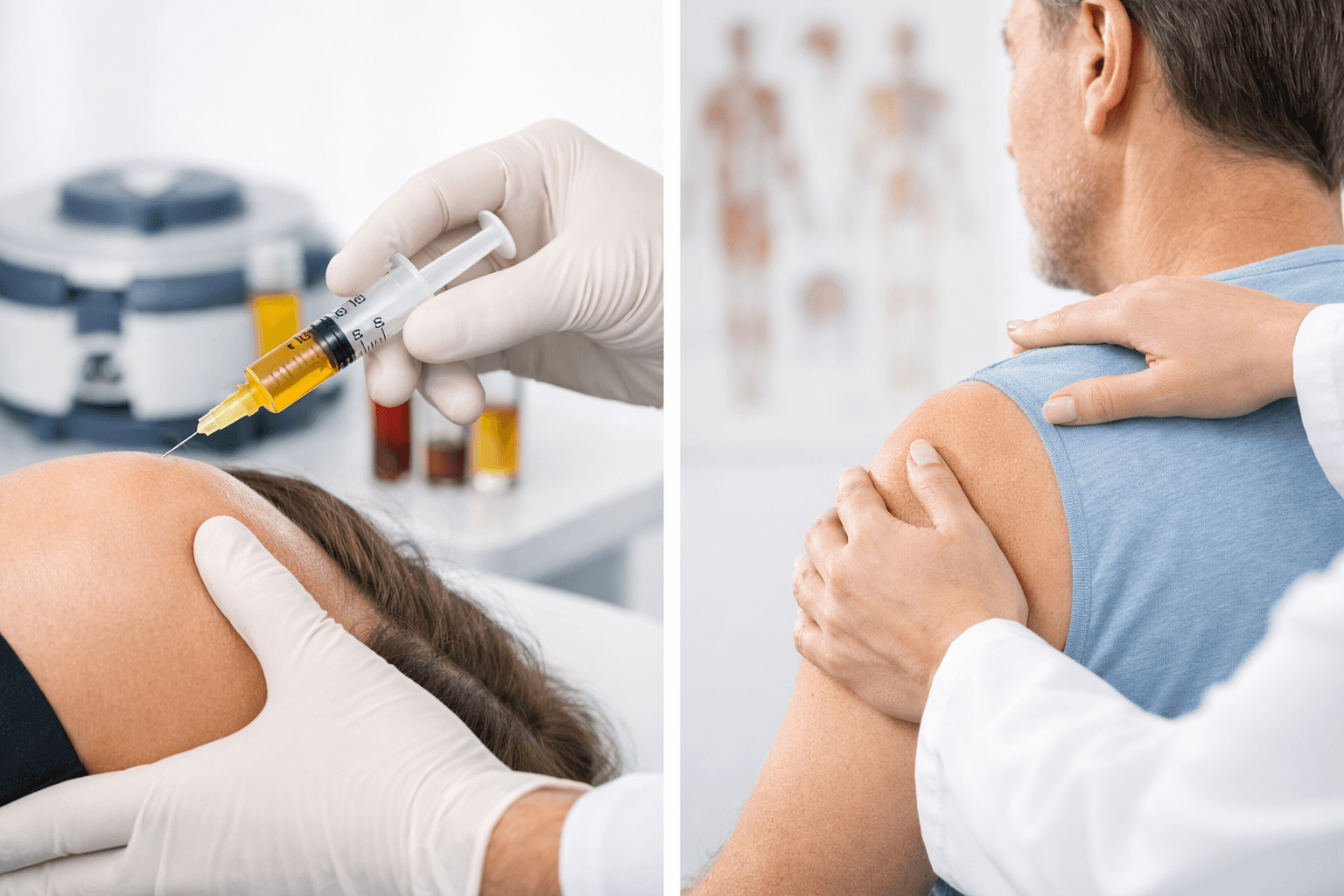
Platelet‑Rich Plasma (PRP) therapy for joint healing is a regenerative treatment designed to support the body’s natural repair processes in areas affected by pain, inflammation, or overuse. During the procedure, a small sample of your blood is drawn and processed to concentrate platelets—cells that release growth factors responsible for tissue regeneration. When injected into joints such as the knee, shoulder, hip, or elbow, PRP helps stimulate collagen production, reduce inflammation, and encourage healing of tendons, ligaments, and cartilage. This non‑surgical approach is often used for mild arthritis, sports injuries, and chronic joint discomfort, offering patients a natural alternative to pain medications or invasive procedures. PRP joint therapy is performed by trained medical professionals and is valued for its safety, minimal downtime, and ability to enhance mobility and comfort over time.
SYMPTOMS OF TMJ MAY INCLUDE
Persistent Joint Pain
Ongoing discomfort in the knees, shoulders, hips, or elbows caused by inflammation or mild degenerative changes can often be eased through PRP’s regenerative effects.
Stiffness or Limited Range of Motion
PRP helps reduce inflammation and support tissue repair, improving flexibility and joint mobility over time.
Swelling or Tenderness
Localized swelling or tenderness from tendon irritation or overuse injuries may respond to PRP’s natural anti‑inflammatory growth factors.
Clicking or Grinding Sensations
Early cartilage wear or joint surface irritation can lead to these sensations; PRP may help nourish and protect joint tissues.
Weakness or Instability
When tendons or ligaments are strained, PRP can assist in strengthening connective tissue and restoring stability.
Slow Recovery from Injury
Athletes or active individuals experiencing delayed healing after sprains, strains, or repetitive stress injuries may benefit from PRP’s ability to accelerate tissue regeneration.

Examples of Joint Healing
Mild to Moderate Osteoarthritis Relief
PRP is commonly used to help reduce inflammation and support tissue repair in joints affected by early‑stage osteoarthritis—especially the knees, hips, and shoulders. Growth factors in PRP may help improve comfort and mobility over time.
Tendon and Ligament Injuries
Conditions such as tennis elbow, golfer’s elbow, rotator cuff irritation, and patellar tendon pain often respond well to PRP. The treatment supports healing in overstressed or partially torn soft tissues.
Chronic Joint Pain From Overuse or Degeneration
Botox
PRP for Joint Healing
Platelet‑Rich Plasma (PRP) therapy for hair loss is a regenerative treatment that uses your body’s own healing components to stimulate dormant hair follicles and encourage natural growth. During the procedure, a small amount of your blood is drawn and processed to concentrate platelets—cells rich in growth factors that support tissue repair and regeneration. When injected into areas of thinning hair, this concentrated plasma helps improve scalp health, increase follicle activity, and promote thicker, stronger strands over time. PRP is a safe, minimally invasive option for both men and women seeking to restore fullness without surgery or harsh chemicals.


PRP Services
PRP Joint Healing
Platelet‑Rich Plasma (PRP) therapy has become one of the most widely used regenerative treatments in orthopedics because it leverages the body’s own biological healing mechanisms to support joint repair. PRP is created by centrifuging a patient’s blood to concentrate platelets—cells that release growth factors such as PDGF, TGF‑β, and VEGF, which stimulate angiogenesis, fibroblast proliferation, and collagen synthesis. These growth factors help modulate inflammation and create a regenerative environment within damaged joints and soft tissues.
How PRP Works in Joint and Tissue Healing
PRP promotes healing through the localized release of growth factors and cytokines that regulate cellular proliferation, differentiation, and extracellular matrix production. These biological signals help repair cartilage, tendons, ligaments, and other joint structures. Clinical evidence shows that PRP can improve pain and function in osteoarthritis by enhancing cartilage repair when delivered via ultrasound‑guided intra‑articular injections. It also accelerates tendon and ligament healing by stimulating fibroblast activity, neovascularization, and collagen deposition—improving the biomechanical properties of injured tissues.
Clinical Evidence Supporting PRP for Joint Conditions
PRP has been studied extensively across musculoskeletal conditions, with the strongest evidence in:
1. Osteoarthritis (especially knee OA)
There is evidence supporting PRP’s effectiveness in treating osteoarthritis, with many studies showing improvements in pain, mobility, and joint function. PRP often provides longer‑lasting benefits than corticosteroid injections and may outperform hyaluronic acid in some cases.
2. Tendon and Ligament Injuries
PRP has demonstrated effectiveness in conditions such as lateral epicondylitis (tennis elbow), rotator cuff tendinopathies, and partial tendon tears. Growth factors in PRP help strengthen connective tissue and improve healing outcomes.
3. Chronic Joint Pain and Overuse Injuries
PRP is frequently used for chronic joint discomfort caused by repetitive strain or mild degenerative changes. It may reduce inflammation and support long‑term joint function by improving tissue quality.


Alle Rewards
Join Allē
Earn points on Allē Brands, as well as a variety of other in-office products and treatments like microdermabrasion, laser hair removal, and more. When you’re ready to use your points, just let your provider know you’re an Allē Member and they’ll redeem them from your Allē Wallet. Every 100 points earns you $10 in savings toward a future Allē product or treatment.
Get in Touch
Hours
Temporarily Closed until June 22nd, 2026
Monday and Friday: By Appointment Only
Tuesday-Thursday 8:00am-8:00pm
Saturday - Sunday: By Appointment Only
Subscribe to Our Newsletter